
CryoEM at Centro Nacional de Biotecnologia - CSIC\ EM image processing, Instruct Image Processing Center - I2PC\ Solid-state NMR, Manuel Rico Laboratory -LMR
The Scipion-Chem Service enables researchers to transform structural information about biological macromolecules into actionable hypotheses for ligand binding and therapeutic development. The service provides a fully integrated environment for binding pocket identification, ligand docking, and virtual screening, allowing users to start with experimentally determined or modeled 3D structures and rapidly generate ranked lists of potential ligands. Users can submit their structures and (optionally) their own compound libraries or access curated public collections to explore new binding sites, prioritise hits, and guide experimental validation.
The service requires as input a 3D atomic structure of the target macromolecule. The user may optionally provide a library of small molecules in SMILES format; otherwise, the screening will be performed against a curated set of ~1500 FDA-approved compounds.
Scipion-Chem offers two main types of analyses:
Results are fully integrated within the Scipion environment, providing interactive 3D visualization of druggable sites, binding poses, and ranked compound lists. The outputs can be exported for further refinement, such as molecular dynamics simulations or medicinal chemistry optimization.
This service enables Instruct users to derive early insights into the druggability of newly solved macromolecular structures and to generate experimentally testable hypotheses about potential ligands. The integration into Scipion ensures traceability, reproducibility, and interoperability with other Instruct pipelines, including those for cryo-EM data processing and atomic model refinement.
The facility will provide support and expertise to researchers using different techniques: Cryo-EM sample preparation and characterisation, Cryo-EM image acquisition of unstained biological material for cryo-EM single particle or cryoelectron tomography (cryo-ET), cryo-electron diffraction (microED) and cryocorrelative microscopy (cryo-CLEM). For many of these services, it is advisable to contact the Instruct Image Processing Centre for data processing support).
The Instruct Image Processing Center (I2PC), part of Instruct-ES, offers an extended duration service "FlexibilityHub” targeted to the exploration of the conformational landscape of flexible macromolecules from sets of cryo Electron Microscopy images of purified samples. A continuous flexibility analysis will be performed using recently developed tools (including Zernike3D, developed at I2PC, among several other methods). This service is especially suited for samples presenting large structural flexibility.
This platform will provide personalised support to Instruct projects requiring specialised processing of either electron or X-ray microscopy images. It will also help developers in integrating their methods into generally accessible analysis workflows. The Instruct Image Processing Centre (I2PC) in Madrid will assign personnel to this analysis, as well as the required computational resources.
The “Manuel Rico” NMR Laboratory (LMR) is dedicated to advancing structural research in Europe by providing access to cutting-edge technologies and essential technical support. The LMR specializes in state-of-the-art NMR spectroscopy, offering services such as spectra acquisition, biomolecular interaction analysis, and spectra assignment. With extensive experience in determining the structures of proteins, nucleic acids, and their complexes, the LMR has contributed around 200 entries to the Protein Data Bank (PDB). The laboratory is particularly renowned for its expertise in studying highly dynamic biomolecules, such as nucleic acids, peptides, and intrinsically disordered proteins, using liquid-state NMR techniques.
The LMR has recently expanded its capabilities with the installation of a novel biosolid NMR spectrometer equipped with a first-generation CPMAS CryoProbe. This addition creates a unique opportunity to combine liquid- and solid-state NMR methodologies within a single facility for the comprehensive study of complex biomolecular systems.
Cryoprobes have revolutionized liquid-state NMR spectroscopy by dramatically improving sensitivity through the reduction of thermal noise achieved by cooling detection electronics to cryogenic temperatures. The new CPMAS CryoProbe extends this technological breakthrough to solid-state NMR, increasing sensitivity by 3–4-fold in heteronuclear-detected experiments. This innovation enables time-efficient multidimensional experiments and facilitates the study of challenging biological systems at physiological temperatures without altering sample composition. Particularly beneficial for diluted samples, low-labeled systems, or naturally abundant molecules, this technology significantly broadens the scope of solid-state NMR applications.
Notably, the LMR is one of only two academic laboratories worldwide to possess this rare CPMAS CryoProbe. This strategic resource is positioning the LMR at the forefront of structural biology research and enabling studies previously considered unfeasible.
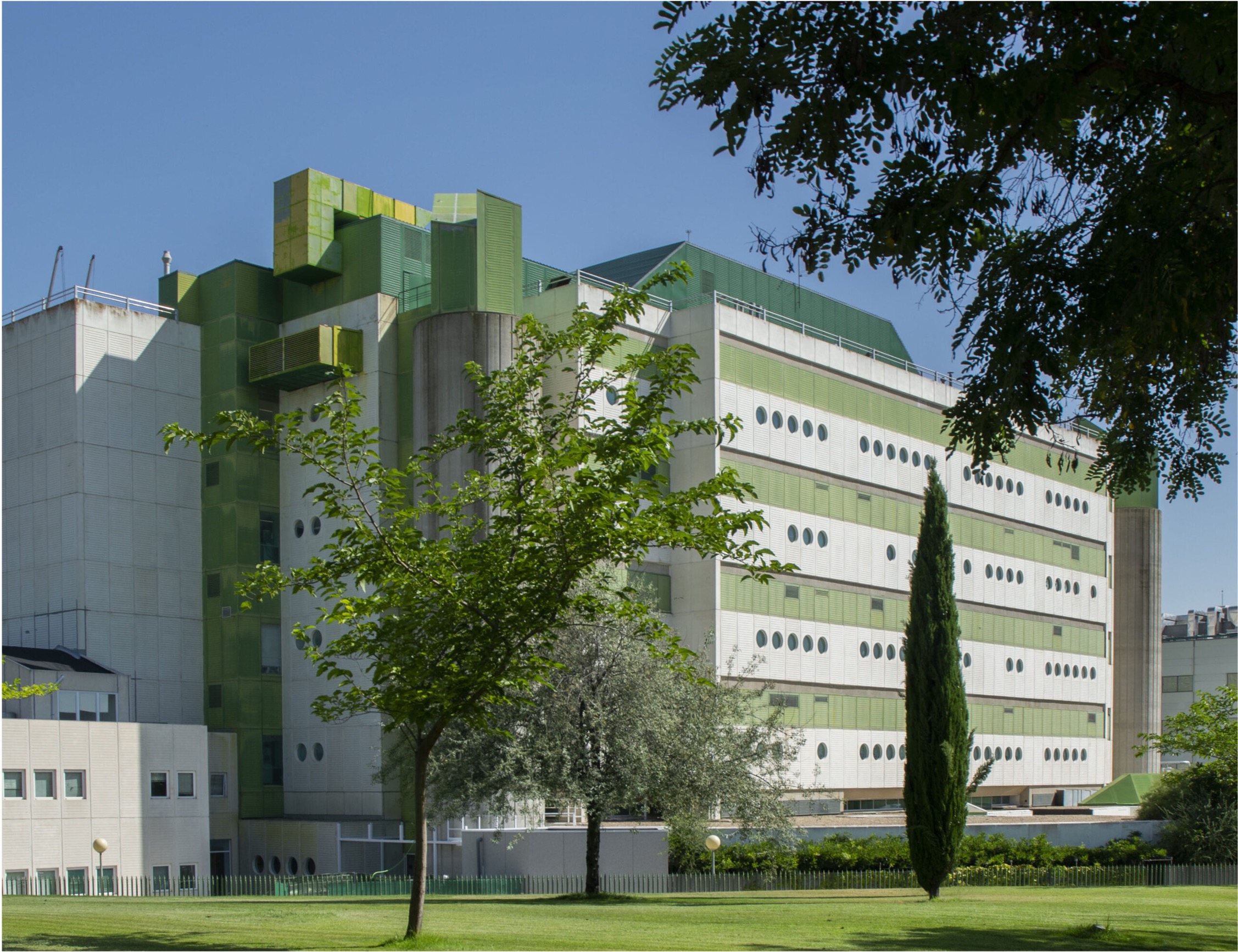
Based at the premises of the Centro Nacional de Biotecnología (CNB), the CSIC cryo-electron microscopy (CryoEM) facility is a state-of-the-art core service offering several services: sample preparation, CryoEM image acquisition of unstained biological material for cryoEM single particle or cryoelectron tomography (cryoET), cryoelectron diffraction (microED) and cryocorrelative correlative light and electron microscopy (cryoCLEM).
Housed in the same building as the I2PC (Instruct Image Processing Centre) and part of Instruct-ES, the CryoEM facility hosts the following infrastructure: Specimen vitrification can be carried out using different devices such as FEI Vitrobot Mark IV, Leica EM CPC and Leica GP2 (for thin samples) and the Leica ICE high-pressure freezer (for thicker samples).
The facility houses a cryoelectron transmission microscope, a 200 kV FEI Talos Arctica equipped with an autoloader, Falcon 4i direct electron detector and Ceta-D camera for electron diffraction. In addition, for sample characterisation the facility also hosts a standard 120 kV electron microscope JEOL JEM1400 for negative stained samples screening.
Finally, for cryoCLEM, the facility offers a Zeiss LS900 AiryScan cryoconfocal microscope equipped with a Linkam cryostage and a Zeiss CrossBeam 550 cryo-FIB-SEM microscope with a Leica cryostage.
The Instruct Image Processing Center (I2PC) at the CNB-CSIC is, within Instruct-ERIC, the European Center for infrastructure provision in Image Processing in Transmission Electron Microscopy under cryogenic conditions (CRYO-EM). To this end it provides support and training in the use of image processing software, at the same time that it works developing new methodological approaches while being committed to open science in the context of the European Open Science Cloud (EOSC).
We provide access for projects requiring advanced image processing, assigning them expert personal and resources (the average time allocated to a project is two weeks)
I2PC, together with the CRYO EM - CSIC Facility, makes the Spanish Instruct Center.
The Manuel Rico Nuclear Magnetic Resonance (NMR) Spectroscopy Laboratory (LMR) is a scientific-technical service of the CSIC located on its Central Campus. The service was formally established in 2003, although the NMR laboratory’s activity dates back to 1964.
Since 2018, together with the NMR Laboratory of the University of Barcelona and the NMR Laboratory of Euskadi, the LMR has been part of Spain’s Map of Singular Scientific and Technical Infrastructures (ICTS), under the Ministry of Science, Innovation and Universities. Since 2025, the LMR has offered access to its facilities through INSTRUCT-ERIC.
Currently, the LMR provides access to two 600 MHz and one 800 MHz NMR spectrometers, all equipped with cryoprobes, as well as facilities for the preparation and handling of biomolecular samples (proteins and nucleic acids), including a production service for isotopically labeled proteins.
CryoEM CNB-CSIC is currently available for remote access only due to COVID-19 restrictions. For information on the availability of specific technologies, view the Technology Availability List or contact support@instruct-eric.org. Please check here regularly for updates.
By car: The University Campus is at the Km. 15 of the Colmenar road (M-607, Ctra. Colmenar Viejo, Km. 15). I2PC at the University Campus
By public transportation: You can reach the University Campus from Madrid either by bus (line 714 from Plaza de Castilla) or by train (line C4 and C10 from Atocha, Sol, Nuevos Ministerios or Chamartin railway stations).
You can find more information on the university website. In the map of the campus, the National Center of Biotechnology is located at the building number 18.
I2PC is currently available for remote access only due to COVID-19 restrictions. For information on the availability of specific technologies, view the Technology Availability List or contact support@instruct-eric.org. Please check here regularly for updates.
By car: The University Campus is at the Km. 15 of the Colmenar road (M-607, Ctra. Colmenar Viejo, Km. 15). I2PC at the University Campus
By public transportation: You can reach the University Campus from Madrid either by bus (line 714 from Plaza de Castilla) or by train (line C4 and C10 from Atocha, Sol, Nuevos Ministerios or Chamartin railway stations).
You can find more information on the university website. In the map of the campus, the National Center of Biotechnology is located at the building number 18.
Address: c/ Serrano, 119. 28006 Madrid. Spain
Website: https://lmr.csic.es/en/
The LMR is located on the Central Campus of the CSIC in a privileged location, in central Madrid very closed to the famous “Residencia de Estudiantes” and the Rockefeller building.
https://maps.app.goo.gl/yWJNS3Bbtw3Lg3mg8
Opening hours 8:00 to 17:00
Remote access: No
Physical access: yes
LMR is accessible through a 10 min walk form “Nuevos Ministerios” station (Metro lines 6, 8, 10 and commuter train lines C-1, C-2, C-3, C-4, C-7, C-8, C-10), also from “Republica Argentina” (line 6) metro station, and urban buses 16,19, 51.
Visit this centre and more by submitting a proposal for access.
Submit Proposal login to contact
login to contact
login to contact